
Welcome to the ETF Prime Podcast
One of the “most helpful plain-English resources for investors who want to demystify exchange-traded funds” – Bloomberg Businessweek
Latest Episode
Rethinking Sector ETFs & Baron Capital’s ETF Debut
Michael Cohick, Director of Product Management at VanEck, breaks down the firm’s lineup of TruSector ETFs and how they aim to address tracking error caused by regulatory diversification limits – constraints that can force traditional sector funds to underweight the largest companies in their benchmarks. Matt Camuso, Head of ETF Solutions at Baron Capital, discusses the firm’s recent entry into the ETF space and outlines its distinctive approach to actively managed growth equity investing, including the Baron First Principles ETF (RONB).
About the Podcast
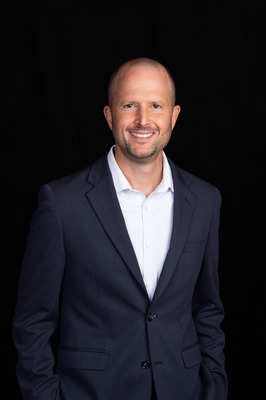
ETF Prime is hosted by Nate Geraci. Learn how to make ETFs a part of your investment portfolio as Nate spotlights individual ETFs and interviews experts from across the country. ETF Prime is available on Apple Podcasts, Android, Spotify, and most other major podcasting platforms. Specific guest interviews can be accessed by visiting the ETF Expert Corner.
Recent Episodes
The ETF Store Show – Upcoming Guest Lineup
One of the “most helpful plain-English resources for investors who want to demystify exchange-traded funds” – Bloomberg BusinessWeek
All guest interviews are available through our featured section “ETF Expert Corner” at etfstore.com. Interviews typically run 10 – 15 minutes and can be played directly from your mobile device. Full podcasts of The ETF Store Show can also be downloaded for free at etfstore.com, Apple iTunes, or Google Play. The ETF Store Show airs every Tuesday at 3pm CST on ESPN 1510AM | 99.3FM in Kansas City and you can listen online at www.1510.com or via TuneIn Radio. We are pleased to welcome the following guests onto the program during the third quarter:
July 11th – Matt Bartolini, Head of SPDR Americas Research at State Street Global Advisors, spotlights several SPDR ESG (Environmental, Social, & Governance) ETFs including the SPDR SSGA Gender Diversity Index ETF (SHE).
July 18th – William Rhind, Founder & CEO of GraniteShares, discusses the company’s first two ETF launches, one of which is now the lowest cost broad-based commodity ETF available – the GraniteShares Bloomberg Commodity Broad Strategy No K-1 ETF (COMB).
July 25th – Greg King, Founder & CEO of REX Shares, highlights the REX VolMaxx Short VIX Weekly Futures Strategy ETF (VMIN), the top performing non-leveraged ETF from the first half of 2017. We will also discuss VIX ETF education.
August 1st – Cathie Wood, Founder & CEO of ARK Invest, spotlights two more of the top performing ETFs from the first half of 2017, the ARK Innovation ETF (ARKK) and the ARK Web x.0 ETF (ARKW). Cathie will also go in-depth on a range of topics from robotics and artificial intelligence, to cryptocurrencies.
August 8th – Phil Bak, CEO of Exponential ETFs, explains the methodology behind the Brand Value ETF (BVAL) which seeks to own U.S. companies with undervalued brands. Carloz Diez, CEO & Founder of MarketGrader Capital, along with Brady Lipp, Managing Director at MarketGrader Capital, discuss the Barron’s 400 ETF (ticker BFOR).
August 15th – Jeremy Schwartz, Director of Research at WisdomTree, offers his perspective on global stock market valuations and highlights areas of opportunity in both developed international and emerging market stocks.
August 22nd – Christian Magoon, CEO of Amplify ETFs, discusses the new Amplify YieldShares Oil Hedged MLP Income ETF (AMLX) and provides an update on the Amplify Online Retail ETF (IBUY).
August 29th – Bryce Tillery, CEO of Eve Capital, spotlights The Wear ETF (WEAR), which owns the stocks of companies deriving revenue from the sale of wearable technology – such as Fitbit, GoPro, and Garmin.
September 12th – Frank Holmes, CEO of US Global, explains the investment rationale for the recently launched US Global Go Gold & Precious Metal Miners ETF (GOAU).
September 19th – Bryce Doty, Senior Portfolio Manager at Sit Investment Associates, offers his thoughts on the Federal Reserve’s interest rate policy and discusses the Sit Rising Rate ETF (RISE). Joe Barrato, CEO of Arrow Investment Advisors, highlights the potential benefits of ultrashort bond ETFs, including the Arrow Reserve Capital Management ETF (ARCM).
September 26th – Rich Powers, Head of ETF Product Management at Vanguard, closes the third quarter with a “State of the ETF Industry”.
For all media inquiries regarding The ETF Store Show, please visit here.
Where Will Mutual Fund Outperformance Come From?
With the latest actively managed mutual fund performance data showing no signs of improvement, Nate & Jason attempt to re-frame the active versus passive debate: “Where is alpha (outperformance) going to come from moving forward?” Also, Brad Lamensdorf, Founder & President of Active Alts, explains the concept of a “short squeeze” and spotlights the Active Alts Contrarian ETF (SQZZ).
Podcast: Play in new window | Download
For Investors, “Home Bias” Can Lead To A Failure To Launch
The following was authored by Bill McNabb, Chairman and Chief Executive Officer of Vanguard.
“Buy what you know.”
It’s one of the adages of investing, and it has plenty of intuitive appeal. After all, the familiar seems inherently less risky. It’s no wonder that many investors heavily tilt their portfolios toward the stocks and bonds of their home country. This is known as “home bias.”
U.S. investors sometimes think they can get all the global diversification they need by owning shares of U.S.-based multinational companies. And that may seem like the best of both worlds: international diversification without ever leaving the friendly confines of home.
The potential pitfall is that, as Vanguard research has suggested, the performance of a company’s shares tends to be highly correlated to its domestic market, regardless of where that company conducts most of its business.
Americans aren’t alone in being portfolio homebodies. Vanguard found that in a range of developed countries—Australia, Canada, Japan, and the United Kingdom, as well as the United States—investors held more in domestic stocks than they would if they tracked a globally diversified, market-weighted benchmark.
Why home bias exists
Vanguard’s Investment Strategy Group identified a range of reasons why investors might not embrace global diversification, including concerns about currency risk and an expectation that their home country will deliver outsized returns.
One factor we identified—preference for the familiar—seems particularly relevant. With so much global uncertainty about geopolitics, monetary policy, and the economic outlook, it’s understandable why investors may not want to stray too far from home.
But in their aversion to the unknown, investors can end up increasing, rather than lessening, their risks. That’s because they’re sacrificing broad global diversification—one of the best ways I know of to help control risk.
In many cases, individual country markets are much less diversified than the global market in total. Global investing, then, can be an answer for investors who want to reduce concentration risk. That can include overconcentration in a particular country, region, or industry.
And the good news is that global investing is easier than ever, thanks to the wide availability of low-cost, internationally diversified stock and bond funds. It’s possible, in a sense, to own the whole world with just a couple of funds.
Expanding our opportunities
A key to overcoming home bias is reframing the way we look at investing outside our home countries. Take, for example, automakers or pharmaceutical companies. There are well-regarded firms in both industries located throughout the world. Over the next five years, nobody can know for sure whether a Japanese or U.S. or European company will produce a popular new sedan that outsells the competition or come up with new treatments to combat illness. So why not own them all? And that includes their bonds along with their stocks.
Full global diversification also allows you to capitalize on opportunities in both developed and emerging economies. Betting on which individual country—let alone company—will be the next market darling can be a fool’s errand.
A better choice can be to harness the potential of all markets. In my personal investment account, I have an emerging markets position that complements my developed-market holdings. Global diversification can help control risk, and it can also expand our set of opportunities among stocks and bonds.
Ultimately, I believe we have the best chance for investment success by giving ourselves more opportunities, not fewer. Own the whole haystack and you never have to worry about finding the needle.
Notes:
All investing is subject to risk, including the possible loss of the money you invest. Diversification does not ensure a profit or protect against a loss.
Investments in bonds are subject to interest rate, credit, and inflation risk.
Investments in stocks or bonds issued by non-U.S. companies are subject to risks including country/regional risk and currency risk. These risks are especially high in emerging markets.
ESG Investing in Focus
Environmental, social, & governance (ESG) investing continues to grow in popularity. Nate & Conor explain the rationale for investing in companies scoring high in ESG factors and touch on the current ESG ETF landscape. Also, ETF.com’s Dave Nadig discusses new MSCI ESG data to evaluate ETFs and VanEck’s Bill Sokol spotlights the VanEck Vectors Green Bond ETF (GRNB).
Podcast: Play in new window | Download
Thematic ETFs: Separating Fads from Long-Term Trends
Thematic ETFs, which typically provide exposure to narrower, evolving segments of the stock market, have their proponents and detractors. Nate & Conor discuss both sides of the debate and explain several key considerations when investing in thematic ETFs. Jay Jacobs, Director of Research at Global X, offers his perspective on thematic investing and spotlights several Global X thematic ETFs (BOTZ, SOCL, & PAVE).
Podcast: Play in new window | Download