Welcome to the ETF Prime Podcast
One of the “most helpful plain-English resources for investors who want to demystify exchange-traded funds” – Bloomberg Businessweek
Latest Episode
Astoria’s 10 ETFs for 2026 and Vanguard’s Approach to Active Equity ETFs
John Davi, Founder & Chief Investment Officer at Astoria Portfolio Advisors, highlights the firm’s 10 ETFs for 2026. Ryan Barksdale, Head of Active Equity Product at Vanguard, and Kim Gailun, Head of Equity Boutiques at Wellington Management, discuss their collaboration in bringing Vanguard’s first active equity ETFs to market.
About the Podcast
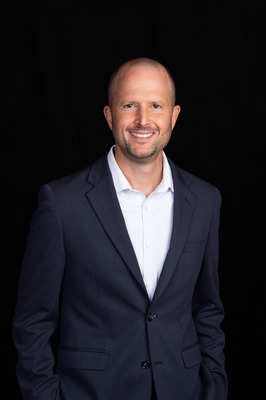
ETF Prime is hosted by Nate Geraci. Learn how to make ETFs a part of your investment portfolio as Nate spotlights individual ETFs and interviews experts from across the country. ETF Prime is available on Apple Podcasts, Android, Spotify, and most other major podcasting platforms. Specific guest interviews can be accessed by visiting the ETF Expert Corner.
Recent Episodes
Energy Outlook, Single-Bond ETFs, & ESG Orphans
VettaFi’s Stacey Morris offers an overview of the energy ETF category and discusses key performance drivers moving forward. F/m Investments’ Alex Morris goes in-depth on their recently launched US Benchmark Series, which allows investors to own each of the “benchmark” US Treasuries in a single-security ETF. Constrained Capital’s Mark Neuman spotlights the ESG Orphans ETF (ORFN).
Podcast: Play in new window | Download
“Price of Admission”
The third quarter of 2022 began with signs of promise as stocks bounced off their June lows and proceeded to gain over 17% into mid-August. However, that hope quickly turned to despair with stocks then dropping 17% and finishing the quarter firmly in the red. Bonds experienced a somewhat similar ride directionally, showing signs of life early in the quarter only to falter down the stretch. In the end, this past quarter proved more of the same – a continuation of one of the most challenging market environments in history.
It’s not often that the term “in history” can be uttered when referencing financial markets. Just how challenging have the markets been in 2022? The bellwether 60/40 stock and bond portfolio is now down over 20% on the year, its worst performance ever – by far. That’s saying something considering the previous two worst episodes were during the Global Financial Crisis in 2008 and the dotcom bubble burst in 2002.
Where Art Thou Bond Protection?
Most successful investors know that periodic and even substantial stock declines are part of the deal. After all, on average, stocks experience intra-year drops of approximately 10% every 2 years and 25% every 5 years. Longer-term, multi-year bear markets also happen with fairly regular frequency. On average, a 30% multi-year decline occurs every 9 years and a 50% drop every 20 years. Compound Capital’s Charlie Bilello refers to the risk of these declines as the “price of admission” – more on that later. This year’s 24% decrease in the S&P 500 – while certainly painful – is most definitely not abnormal. What is unusual is the lack of protection, or hedging, offered by bonds. Historically, high quality bonds have tended to serve as a ballast during steep stock market sell-offs. Not in 2022.

The end result is that bonds have offered no offset to the stock bear market. According to Strategas Research, “this is the first time stocks and bonds have fallen in tandem for three consecutive quarters since 1976”. Notably, the stock and bond returns referenced above are for U.S. markets (S&P 500 Index and Bloomberg U.S. Aggregate Bond Index, respectively). Global stocks and bonds have fared even worse this year, providing little benefit in the portfolio diversification process.
What’s Behind this Unique Situation?
By now, most investors are well aware of the single biggest driver of financial markets this year: the Federal Reserve. The Fed continues embarking on an aggressive monetary tightening path in an effort to rein in the highest inflation in 40 years. These efforts include raising interest rates and reducing assets held on their balance sheet. The Fed is doing this despite indications that inflation is likely more of a supply-side problem than a demand-driven one. In other words, an argument could be made that the Fed is hiking rates into a less-than-stellar economic backdrop – one where consumer demand isn’t the primary driver of inflation. Instead, a lack of supply is the primary culprit.
Regardless, the key question right now is, “when will the Fed pivot, backing off from their aggressive posture?”. The answer is not until they believe inflation is under control – and they appear willing to damage the economy in the process. So far this year, the Fed has raised interest rates 3% and expectations are they will hike rates an additional 1.25% by year end.
Bringing all of this back to bonds, recall that bond prices move in the opposite direction of interest rates. As rates go up, the prices of bonds fall – which is exactly what we’ve witnessed in 2022.
So Where Does This Leave Investors?
As noted earlier, an occasional downturn in stocks – even a fairly significant one – shouldn’t come as a surprise. Successful investors know that a year like 2022 is the “price of admission” to the stock market “ride”. If an investor is unwilling or unable to stay on that ride, what’s the point of paying the price of admission to begin with? In other words, with stock market risk comes the potential for longer-term rewards. While declines are always unpleasant, a proper perspective is important in order to actually capture those rewards. Additionally, bear markets are typically much shorter in duration and smaller in magnitude than bull markets – which is why stocks have historically delivered a roughly 10% average yearly return.

As for bonds, the price of admission has never been as steep as what investors have paid this year. However, there is a silver lining in that the ride will likely be much more enjoyable moving forward. Savers were severely punished following the 2008 Global Financial Crisis as the Fed pushed rates to historic lows. That culminated with a zero-interest rate policy during the Covid-19 pandemic. One year ago, the yield on a 2-year Treasury bond was a paltry 0.30%. Today? It’s well over 4%.

There are now real, meaningful opportunities to generate reliable portfolio income, something that has been nearly impossible to do unless investors have been willing to chase riskier yields. This last point bears special mentioning, as we view bonds as a portfolio ballast and we have been well-positioned – all things considered. Our diversified fixed income portfolio has been comprised of shorter duration and higher quality bonds, along with investment grade floating rate notes and Treasury Inflation Protected Securities (TIPS). These holdings have helped buffer against the overall bond carnage, providing at least some refuge in this remarkably atypical market environment.
The bottom line with bonds is similar to that of stocks. An investor’s ability to focus on longer-term rewards is paramount. While rising interest rates have caused some short-term pain for bond holders, the good news is that higher yields now equate to greater portfolio income moving forward.
Our goal is always to keep the “price of admission” as low as possible for your particular situation and ensure you are getting on the correct “rides”. We do that by focusing on areas we have certainty over: the longer-term benefits of global diversification, disciplined investment management, lower fund costs, tax efficiency, sound investor behavior, and most importantly – understanding your unique financial goals. We have the utmost confidence that the longer-term rewards provided by the markets are worth the shorter-term lack of comfort. As always, our team of advisors is here to help answer your questions. Please don’t hesitate to reach out to your advisor at any time to further discuss the markets or your portfolio.
Cramer ETFs, Min Vol Strategies, & Value Investing
VettaFi’s Todd Rosenbluth discusses recent filings for two ETFs based on stock picks from CNBC personality Jim Cramer and also offers perspective on 2022 ETF flows. BlackRock’s Abby Woodham and MSCI’s Anil Rao go in-depth on minimum volatility strategies. Distillate Capital’s Tom Cole spotlights their unique approach to value investing.
Podcast: Play in new window | Download
The State of ESG
VettaFi’s Dave Nadig goes in-depth on the state of ESG investing, including its recent politicization, advisor interest, fund company positioning, and how it impacts corporate behavior. Matt Piro, Global Head of ESG at Vanguard, explains the firm’s overall ESG philosophy, common misconceptions around performance, the importance of fund fees, and the challenge of no “one-size-fits-all”.
Podcast: Play in new window | Download
ETF Prime – Upcoming Guest Lineup
One of the “most helpful plain-English resources for investors who want to demystify exchange-traded funds” – Bloomberg BusinessWeek
In addition to the following guests, be sure to catch our weekly segment with the experts at VettaFi! Subscribe to receive the latest ETF Prime podcast directly to your inbox.
October 4th – Matt Piro, Global Head of ESG Product at Vanguard, explains the firm’s ESG philosophy and highlights their ESG ETF lineup.
October 11th – Abby Woodham, V.P. of Factor Strategy at BlackRock, and Anil Rao, Executive Director of Research at MSCI, describe the inner workings and merits of minimum volatility strategies. Thomas Cole, Co-Founder & CEO of Distillate Capital, discusses their approach to value investing as reflected in the $700+ million US Fundamental Stability & Value ETF (DSTL).
October 18th – Alex Morris, President & CIO of F/m Investments, goes in-depth on their recently launched US Benchmark Series, which allows investors to own each of the “benchmark” US Treasuries in a single-security ETF. Mark Neuman, Founder & CIO of Constrained Capital, spotlights the ESG Orphans ETF (ORFN).
October 25th – Kelsey Mowrey, President of Motley Fool Asset Management, explains why the firm converted several mutual funds to ETFs and expands on the now $1+ billion ETF lineup. Will Rhind, Founder & CEO of GraniteShares, talks single stock ETFs.
November 1st – Nick Elward, Head of Institutional Product & ETFs at Natixis Investment Managers, details the firm’s unique multi-affiliate approach to active management and the rationale for using a semi-transparent ETF wrapper.
November 8th – Holly Framsted, Director of ETFs at Capital Group, describes the active evolution of ETFs and highlights their nearly $3 billion suite of ETF strategies. Lisa Langley, CEO of Emerge Capital Management, outlines their new EMPWR platform, which is designed to support women investment managers and currently offers 5 ETFs.
November 22nd – Troy Cates, Co-Founder & Managing Partner of NEOS Investments, discusses the recent launch of their initial suite of “next evolution income ETFs”, which utilize option overlay strategies.
November 29th – Kristof Gleich, President & CIO of Harbor Capital Advisors, dives into their unique ETF lineup including the Harbor All-Weather Inflation Focus ETF (HGER).
December 6th – Brett Winton, Chief Futurist at ARK Invest, offers perspective on disruptive tech stocks and the current market environment. Sylvia Jablonski, CEO & CIO of Defiance ETFs, spotlights their recently launched Daily Short Digitizing the Economy ETF (IBIT).
December 20th – Ben Johnson, Head of Client Solutions – Asset Management at Morningstar, recaps the year in ETFs and looks ahead to 2023.
All guest interviews are available through our featured section “ETF Expert Corner” at etfstore.com and can be played directly from any mobile device. Full podcasts of ETF Prime can be downloaded for free at etfprime.com, VettaFi, Apple Podcasts, Spotify, Android, and other major podcast apps.
For all media inquiries regarding ETF Prime, please visit here.